

Wheat Bran Buying Guide: Flakes vs Pellets, Quality Checks and Bulk Supply

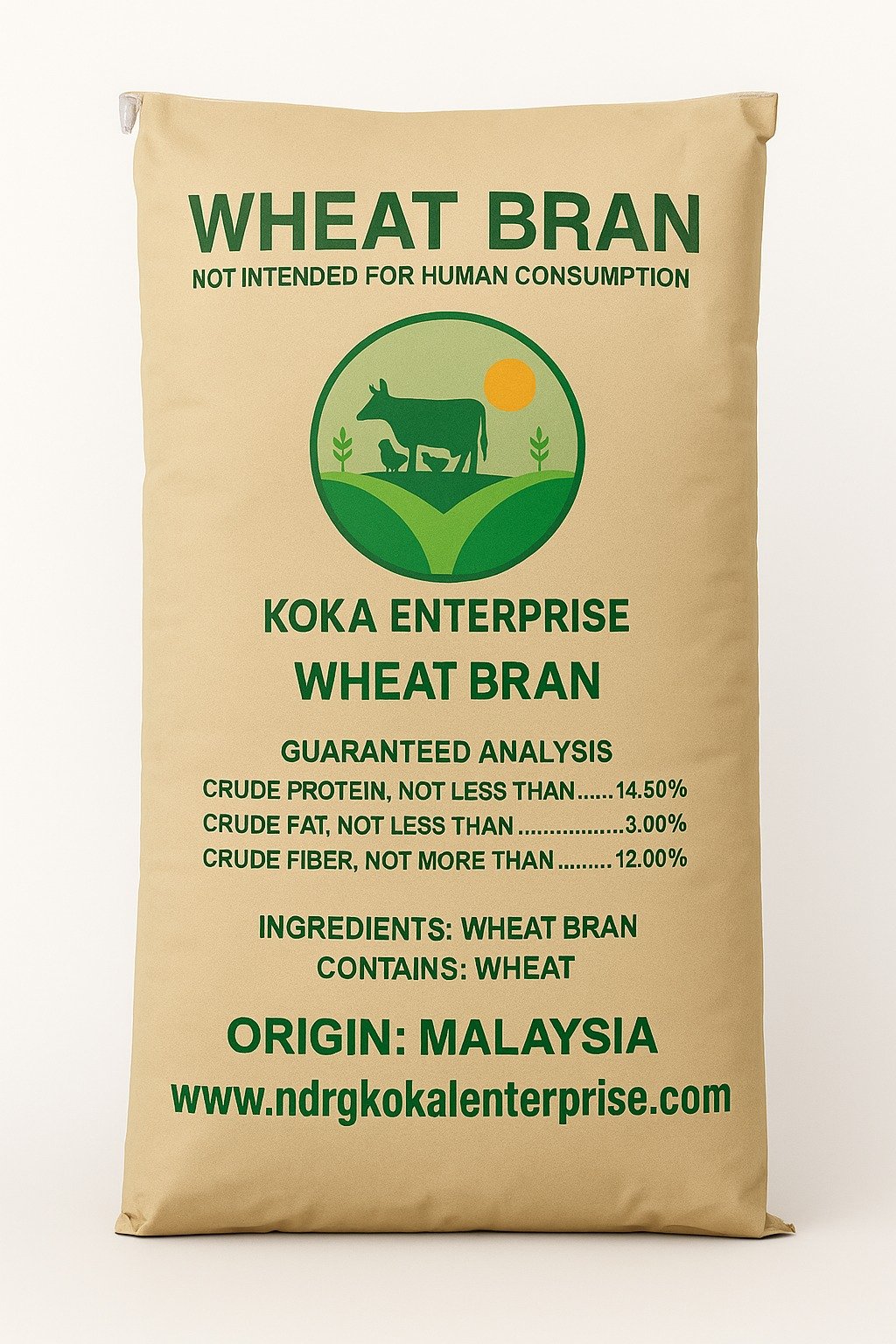
Quick answer: When buying wheat bran, choose between flakes (traditional, bulky) and pellets (denser, less dust, easier to transport). Check protein (about 14–17%), fibre, moisture (13% max) and freedom from mould, insects and foreign matter. Wheat bran is used in livestock feed, as a premix carrier, in mushroom growing and as a soil conditioner.
Updated October 2026 · NDRG Kokal Enterprise, Sarawak, Malaysia
Key facts
| Protein | 14–17% |
|---|---|
| Moisture | 13% max |
| Forms | Flakes or pellets |
| Main risks | Mould, insects, moisture |
| Uses | Feed, premix carrier, mushrooms, soil |
| Packing | Bags or bulk |
Flakes vs pellets
| Form | Advantages | Drawbacks |
|---|---|---|
| Flakes | Traditional, mixes easily | Bulky, dusty, more freight per tonne |
| Pellets | Dense, less dust, cheaper to ship and store | Must be soaked or ground for some uses |
Quality checklist
- Protein, fibre and moisture on the certificate of analysis
- Fresh, sweet smell; no musty odour
- No visible mould, insects or foreign matter
- Even colour and texture
Storage
Store in a dry, ventilated place on pallets and use within a few months, because bran can absorb moisture and attract insects in humid climates.
Compare with rice bran in our wheat bran vs rice bran guide, or order wheat bran.
Frequently asked questions
What protein does wheat bran have?
Usually about 14% to 17% crude protein.
Are wheat bran pellets better than flakes?
Pellets are denser, less dusty and cheaper to ship; flakes mix easily and suit traditional feeding.
How long does wheat bran keep?
A few months if stored dry and ventilated; humidity shortens shelf life.
Related
Buy in bulk: request a wholesale quote from NDRG Kokal Enterprise, Siburan, Sarawak. Call or WhatsApp +60 13-739 1922 or email info@ndrgkokalenterprise.com.
 Protein Meals · Amino Acids · Fibre · Feed Pellets
 English
 Bahasa Melayu
 简体中文