

Fish Meal Supplier in Malaysia: Grades, Protein Levels and How to Buy in Bulk

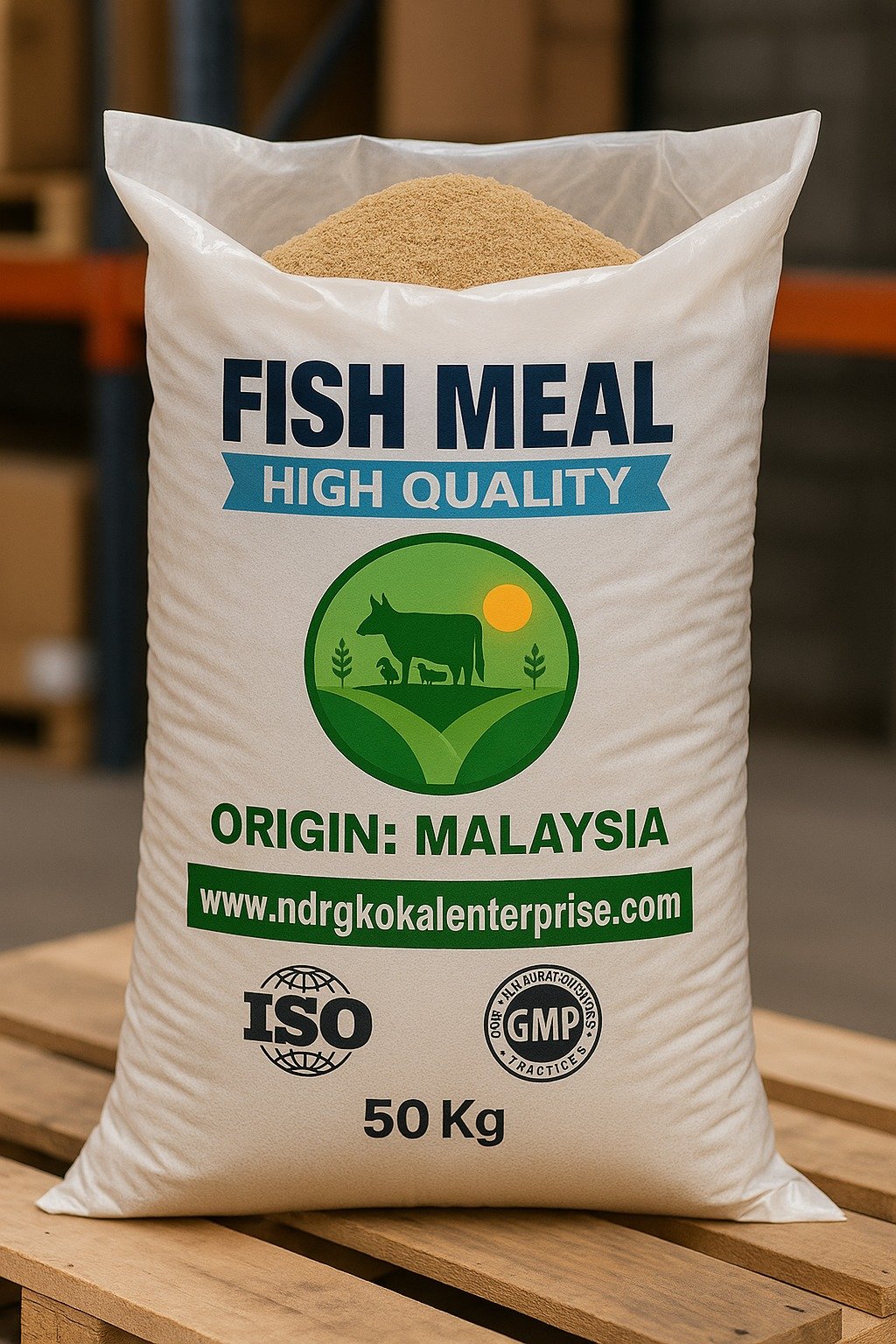
Quick answer: When buying fish meal in Malaysia, compare crude protein (usually 55–65%), fat, moisture, ash and freshness (TVB-N), and ask for a certificate of analysis for each batch. Price depends mainly on protein grade, fish source, freshness and order size. A reliable supplier offers consistent batches, clear specifications, proper bagging and local delivery.
Updated October 2026 · NDRG Kokal Enterprise, Sarawak, Malaysia
Key facts
| Common grades | 55%, 60% and 65% crude protein |
|---|---|
| Key quality tests | Protein, fat, moisture, ash, TVB-N, salt |
| Main buyers | Aquaculture, poultry, pig farms, feed mills |
| Price drivers | Protein grade, freshness, fish source, volume |
| Packing | 25–50 kg bags or bulk |
| Storage | Cool, dry, ventilated, off the floor |
What is fish meal?
Fish meal is made by cooking, pressing, drying and grinding whole fish or fish trimmings. The result is a brown powder rich in digestible protein, essential amino acids such as lysine and methionine, minerals and omega-3 fatty acids. It is one of the most valuable protein ingredients for fish, shrimp, poultry and young pigs.
Fish meal grades compared
| Grade | Crude protein | Typical use |
|---|---|---|
| Standard | About 55% | Poultry and pig feed, organic fertilizer |
| Prime | About 60% | Poultry, pig and fish feed |
| Super prime | About 65%+ | Shrimp, fish fry and piglet starter feed |
What affects fish meal price?
- Protein grade: higher protein costs more per tonne.
- Freshness: low TVB-N and histamine values show fresh raw material and command a premium.
- Fish source: whole fish meal is usually higher quality than by-product meal.
- Order size and delivery: bulk orders and nearby delivery lower the cost per kilogram.
- Global supply: fishing seasons and catches in major producing countries move prices worldwide.
Quality checklist before you buy
- Ask for a certificate of analysis: protein, fat, moisture (10% max), ash, salt and TVB-N.
- Check colour and smell: fresh fish meal is light to medium brown with a clean fishy smell, not burnt or rancid.
- Confirm it is stabilised with an antioxidant to prevent heating in storage.
- Request a sample for your own feed trial or lab test.
How to store fish meal
Store bags on pallets in a cool, dry, ventilated warehouse, away from direct sun and moisture. Use stock in first-in, first-out order to keep it fresh.
Fish meal vs soybean meal
Fish meal has more protein and a better amino acid balance, but costs more. Many feed formulas combine both. See our comparison of fish meal vs soybean meal.
Frequently asked questions
Where can I buy fish meal in Malaysia?
From feed ingredient suppliers such as NDRG Kokal Enterprise in Sarawak, which supplies fish meal in bags or bulk with a certificate of analysis.
What protein content should fish meal have?
Most commercial fish meal contains 55% to 65% crude protein; 60% and above is preferred for fish and shrimp feed.
What affects the price of fish meal?
Protein grade, freshness, raw fish source, order volume and global fishing supply are the main price drivers.
How long does fish meal keep?
Properly stabilised and stored dry, fish meal usually keeps for about 6–12 months.
Related products
Related guides
- Fish Meal vs Soybean Meal: Which Protein Is Best for Your Animal Feed?
- DL-Methionine vs L-Lysine: Feed Amino Acids Explained for Poultry and Pigs
- Best Organic Nitrogen Fertilizers: Blood Meal vs Feather Meal vs Fish Meal
Buy in bulk: request a wholesale quote from NDRG Kokal Enterprise, Siburan, Sarawak. Call or WhatsApp +60 13-739 1922 or email info@ndrgkokalenterprise.com.
 Protein Meals · Amino Acids · Fibre · Feed Pellets
 English
 Bahasa Melayu
 简体中文